


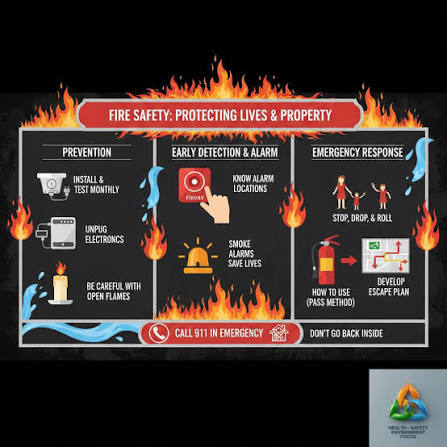
Rapid Response Security: Essential Steps for On-Site Fire Hazards

Construction sites, industrial premises, commercial buildings, and maintenance works may produce fire hazards in a few seconds. However, effective fire protection begins before ignition through the identification of hazards, the control of combustible materials, the maintenance of communication, and the availability of trained staff to check the changing situation. It is important to take into account that hot work must be controlled because heat, sparks, and molten particles produced as a result of the use of such equipment as welders, grinders, torches, etc., can travel a distance from the place of work. Due to the above factors, the fast fire watch co is the right company to perform fire-watch services on-site.
Identify Hazards Early
Conduct a site inspection prior to works commencing. Examine the area of work in addition to walls, wall spaces, adjacent rooms, floors, openings, cable routes, materials stored, walls and wall spaces behind work surfaces, and wall spaces above and below work surfaces.
OSHA provides specific situations that necessitate the use of a fire watch for some hot-work activities, especially when openings are present or combustible material cannot be removed or protected.
Common hazards include:
- Welding, cutting, brazing and grinding operations.
- Flammables: liquids, gases, coatings (must be considered separately).
- Packaging, waste, sawdust, and debris
- Concealed combustible materials
- Openings that will let sparks fly through them.
Control Ignition Sources
Controlling the source of ignition and the surrounding combustible materials is an initial measure towards fire safety. As per the NFPA recommendations for hot work, hazard identification, exposure assessment, and control before beginning the task are suggested practices.
Before hot work:
- Clear away any flammable debris.
- Cover the rest of the combustibles with appropriate protection.
- Check out nearby and hidden spaces.
- Ensure suitable extinguishing equipment is available.
- Set up communication and emergency protocols.
- Provide access to authorized persons to stop unsafe work activity.
While OSHA requirements are different from site to site, OSHA shipyard standards set examples of separation and protection requirements for hot-work activities.
Maintain Active Fire Watch
A fire watch is a person who is there to watch continuously while you are working when there may be a risk of fire. When hot work is being conducted, OSHA suggests that fire-watch personnel assigned to duties under OSHA’s shipyard requirements should not be doing other work. (OSHA)
Key responsibilities include:
- Monitoring for smoke, sparks, fire, and smoldering materials
- Monitoring affected areas due to heat or sparks
- Providing firefighting information, tools, and supplies in a readily accessible way
- Reporting unsafe conditions
- Operating alarms as necessary
- Post-work follow-up activity observation
Post-work monitoring is crucial because heated materials can still be able to burn after the work has been visibly terminated. The monitoring period is dependent on applicable standards.
Document and Improve
Documentation is used to transform one-off observations into a repeatable safety process. Document inspections, hot-work permits, patrol observations, alarms and incidents, corrective actions, and changes in site conditions.
NIOSH’s construction fire-safety resources focus on hazard identification, hazard prevention, preparedness for emergencies, and OSHA standards related to construction fires.
Site fire prevention plan, applicable codes and emergency procedures, as well as local requirements should be taken into account when assessing the fast fire watch co capabilities.
FAQs
When is a fire watch necessary?
A fire watch is typically employed when sparks, heat, or slag may start a fire. The applicable workplace standard is used to determine specific requirements.
What should a fire watch monitor?
A fire watch must constantly observe the workplace and surrounding areas for signs of smoke, sparks, flame, smoldering materials, and other such conditions.
What should be the duration of monitoring?
The minimum period is dependent on the standard applied and site conditions. NFPA and OSHA may have differing requirements; the governing requirement must be followed.
Stronger Site Readiness
Preparation is as important to fire safety as is response. Hazard identification, controlling combustibles, being focused and keeping an eye on the situation, and ensuring that emergency procedures are clear and effective establish a way to deal with changing conditions on site.
Standard documentation is also a tool for ongoing enhancement. Incident, near miss, inspection, and work condition reviews ensure that safety procedures are practical and up to date.